Connections with the Land and Place: Ecology, Sustainability and Community
Monday 23 – Saturday 28 September 2024
I had a slow start to this second week in Birnam with taking Caelan to school at 8.30am. I got to Birnam at 9.30 after stopping for fuel for the car in Perth. After arriving at my parents’ house, where I would be staying for a few nights this week, I worked at the kitchen table doing some reading and preparing to see Mridula at Birnam Studio Gallery, before heading off on foot to meet her.
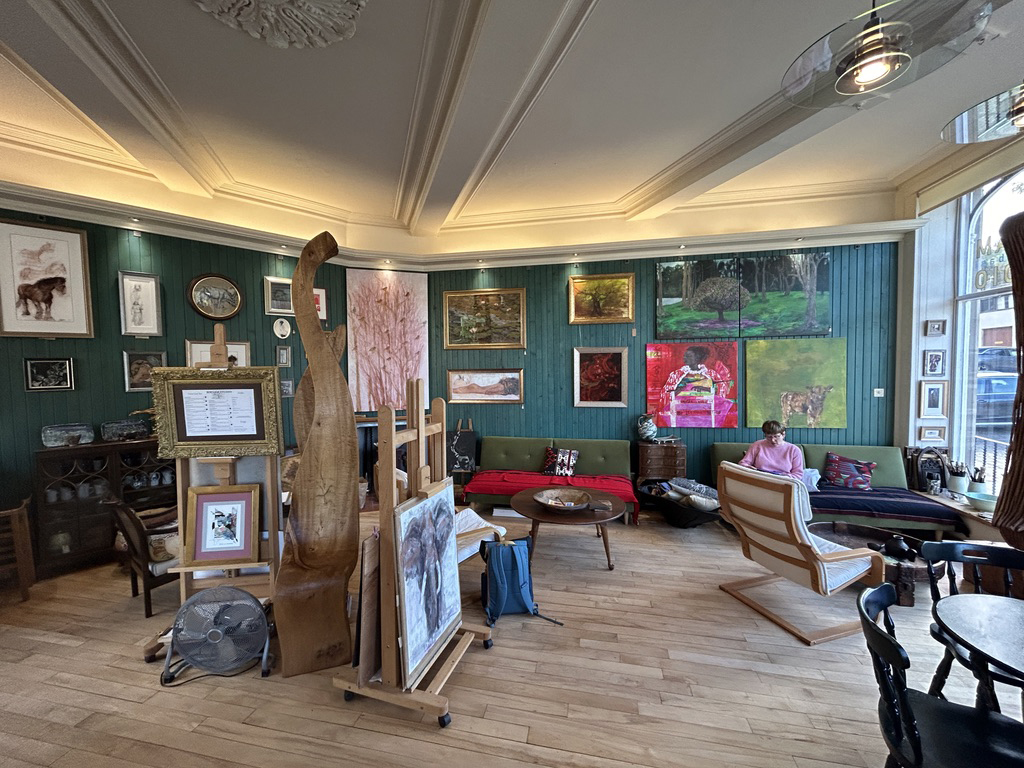
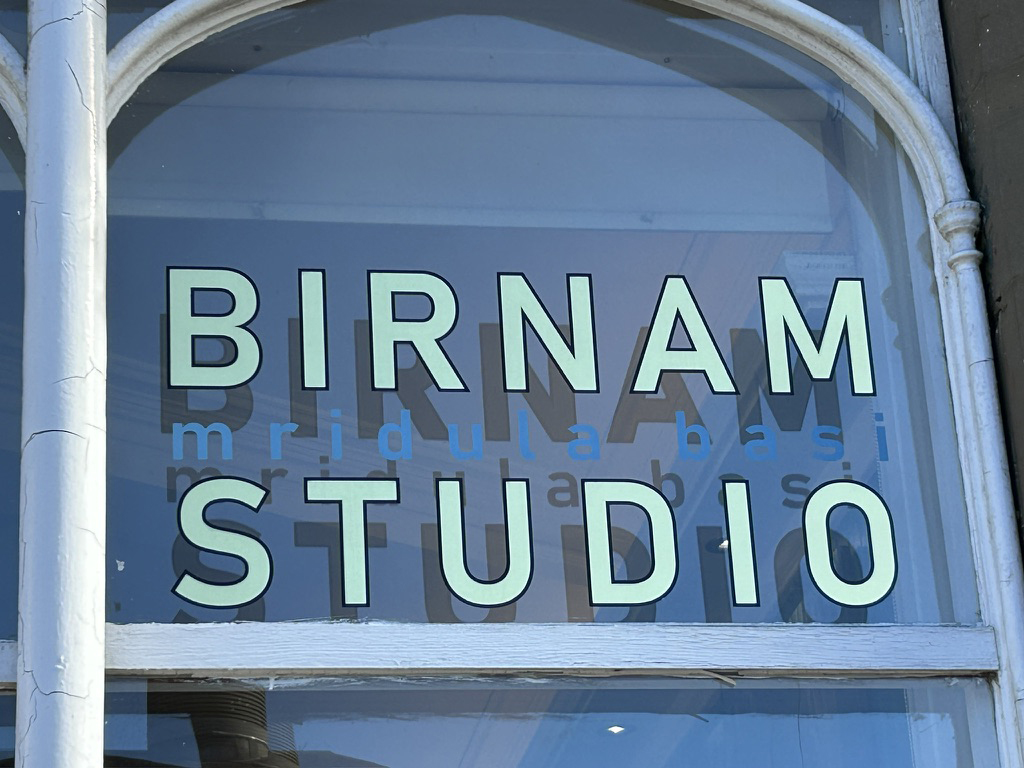
When I got to Birnam Studio Gallery at around 2pm we chatted about my plans for the Fount magazine and the connection to my research project. I left the project information with Mridula to read. Someone I knew from my school days then came in for a chat which was a nice surprise. We had lots to talk about connected to art. She is an art historian and a cook, who is setting up a supper club business which sounds great! We talked about the window space and my idea for the first issue of Fount to be focused on exploring the concept of architectural space as a publication. We also talked about a man who is making a living making copies of paintings by famous people like Van Gogh Sunflowers, Basquiet, and Picasso for example. He only sells his work through Hatton House Gallery, and I got the low down on the local people involved in that gallery operation. My recorded discussion with Mridula tomorrow should provide lots of rich data.

I spent the next morning at the house doing emails before walking down Birnam Glen to the Climate Café event in the old surgery in Little Dunkeld. This was an interesting event focused on land use and nature finance. The discussion surrounded a piece of land next to the river Almond – defined by ecologists as riverwoods. After this, I went to Birnam Arts for a coffee and a piece of cake as they don’t serve lunch Mon-Wed. I then went to Birnam Studio Gallery to do my interview, but Mridula wanted to make it happen on Thursday instead which was fine by me, I was tired. I went back to Birnam Arts for a bit to see the new exhibition and to write some emails in the space. It was busy and I saw another old school friend who was setting up for some fiddle workshops and performances connected with the current exhibition.
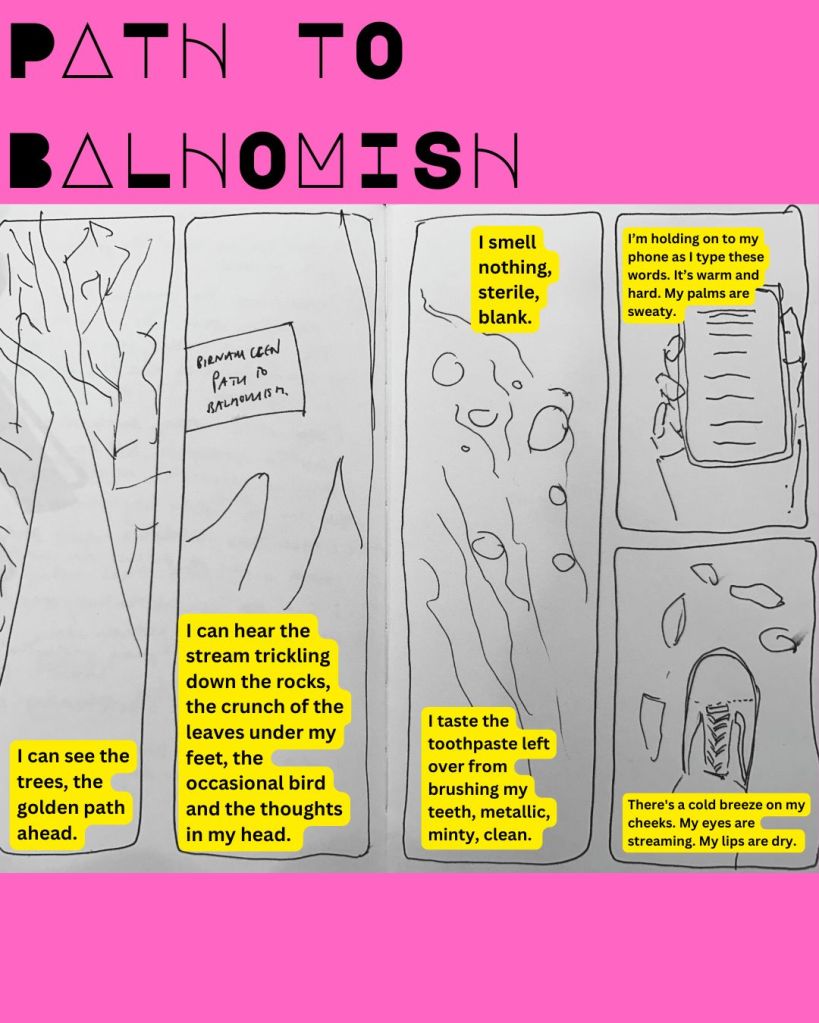
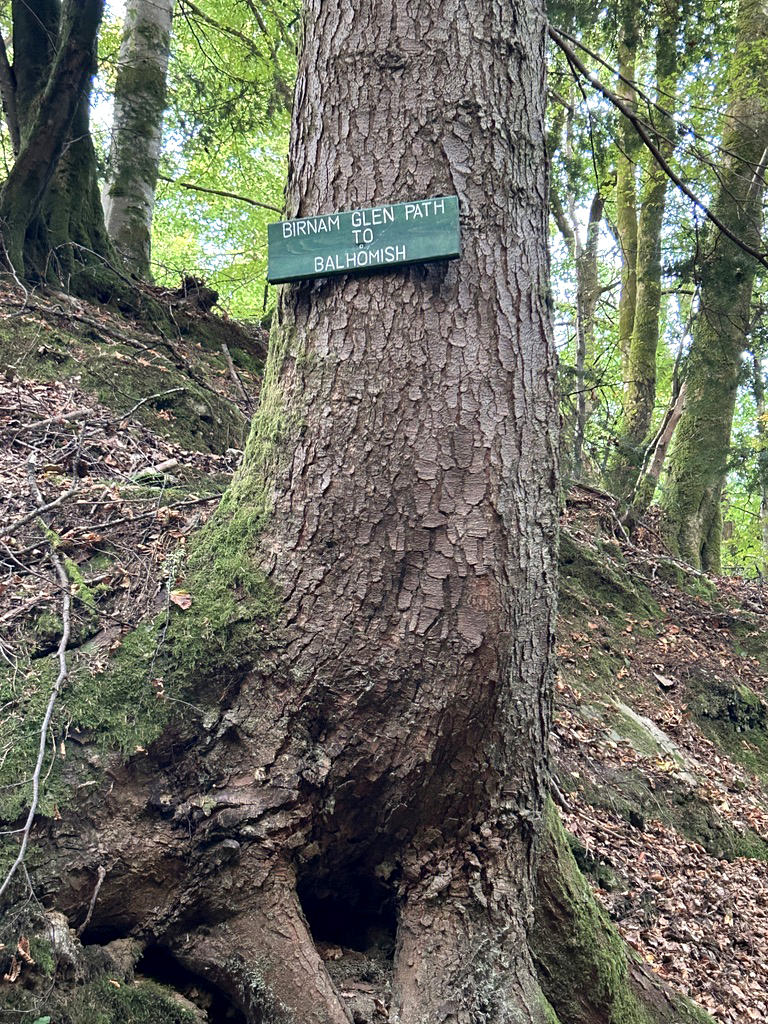
My interview with Mridula went well on Thursday. It takes more energy than I remember to do this than I think it will. I felt tired the following day and decided to take a walk towards Balhomish, an old farm which lies in the valley to the right of Birnam Hill. This was a nice way to check in with the landscape around me again and have a break from thinking! I made a quick memory poetry comic but haven’t yet published this to my Instagram.
My last day of this week of fieldwork was great for hearing more about connections people were creating amongst their community discussions of climate change and sustainability more broadly. I headed out for the first part of the day to my second Climate Café event, in the old surgery in Little Dunkeld, which was focused on books about sustainability. I came away with a long list of books on the subject that people involved in the Climate Café felt were important for their understanding of climate change and sustainability to them and to their interests. These included titles by well known scientists, ecologists and geologists, and economists. The list is long and I haven’t read all of these books but they are listed below:
- The Future we Choose by Christina Figueres and Tom Rivett-Carnac.
- How Bad are Bananas? The Carbon Footprint of Everything by Mike Berners-Lee
- Hope in Hell A Decade to Confront the Climate Emergency by Jonathon Porrit
- Rooted How Regenerative Farming Can Change the World by Sarah Langford
- Wilding: The Return of Nature to a British Farm by Isabella Tree
- Wintering, The Power of Rest and Retreat in Difficult Times by Katherine May
- Doughnut Economics by Kate Raworth
- Utopia for Realists and How We Can Get There by Rutger Bregman
- Vitamin N: The Essential Guide to a Nature Rich-Life by Richard Louv
- From What is to What if: Unleashing the Power of Imagination to Create the Future we Want by Rob Hopkins
- Hell and High Water: Climate Change, Hope and the Human Condition by Alastair McIntosh
- Soil and Soul by Alastair McIntosh
- Beacons: Stories From Out Not so Distant Future a collection of short stories
- Six Degrees: Our Future on a Hotter Planet by Mark Lynas
- Peatbogs, Plague and Potatoes: How Climate Change and Geology Shaped Scotland’s History by Emma Wood
- Collapse by Jared Diamond
- It’s Not that Radical by Mikaela Loach
- Saving Us by Katharine Hayhoe
- How to Save Our Planet the Facts by Mark Maslin.
Straight after this fascinating discussion of the books listed above, I gave my thanks followed quickly by my apologies for dashing off so quickly and got into the car to drive the near 100 miles journey north to attend the Hopeful Futures event which was held in the WASPS Inverness Creative Academy that afternoon and organised and hosted by Mairi McFadyen and Kirsten Body (Circus Artspace).
I was told about the Hopeful Futures weekend event while I was on the phone with Atlas Arts in Skye. I was telling them about my project and looking to arrange some time to come and visit them in Skye for the second set of fieldwork weeks. It so happened that their Making Publics Press, a mobile book-making studio was travelling to this event to be used in the afternoon session. I took the opportunity to attend so I could see what the press was like and to meet Katharine who organises this fantastic facility. What I found was a community coming together to discuss localised initiatives in the highlands and islands which held the purpose to create a sense of possibility for people to feel more hopeful about the future in such times of environmental, social, cultural and political crisis.
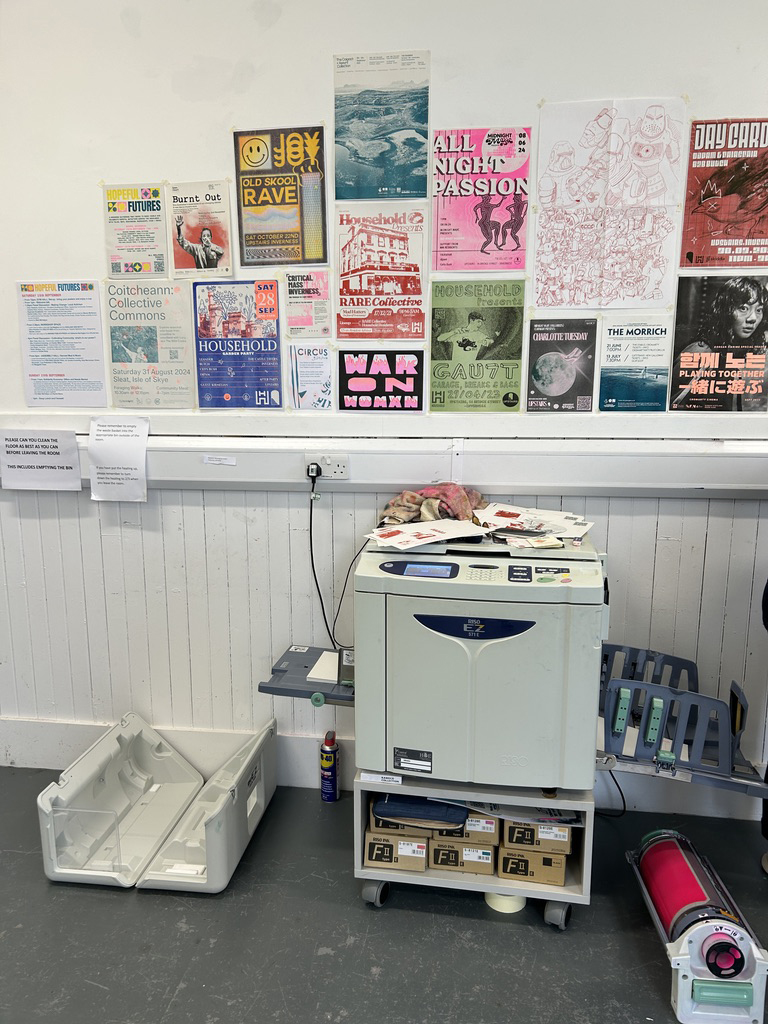
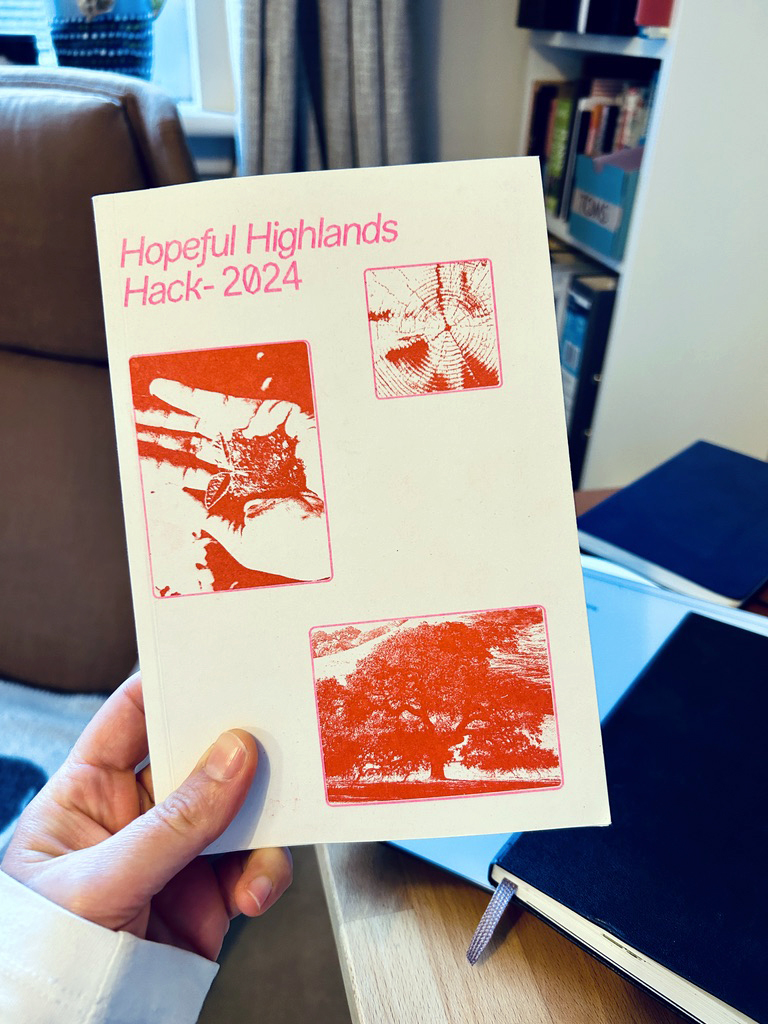
The afternoon session involved learning how to make a zine with Cat Meighan from the Highland Zine Bothy. In addition, there was a Riso printing machine, facilitated by the Isle of Riso, which was used to print copies of the cover for making your own copy of the publication, Hopeful Highlands Hack, which was all ready for binding. The pages which were assembled from crowdsourced content and ready to be bound in little piles were all laid out on a table. Each of us attending the workshop then took our copy of the cover and the pages of our book and worked our way through the perfect binding machine and the trimmer under the close supervision of Katharine from the Making Publics Press. I was delighted with my own copy of this publication which was co-written in terms of the content and facilitated by the Isle of Riso and the Making Publics Press and which I was able to individually produce on site. I am minded of the term ‘social sculpture‘ developed by Joseph Beuys and others who have used the term such as Sarah Lowndes and wonder if this experience could be termed accordingly as ‘social publishing’. I will explore this concept more as the research progresses and in future writing.
Books about sustainability and publishing processes such as the one described above of the Hopeful Highlands Hack are certainly connecting people with common worries about our current situation but they are also giving people a reason to be hopeful about the future situation and connected to their sense of place, community and a responsibility to it.
 Research Town
Leave a comment